
Rokohumin, a liquid amino acid fertilizer, is a nutritional cocktail of amino acids, peptides, humic acids, macro and micronutrients, making it the right choice for plants. It is a growth-stimulating agent that supports nutrient uptake and increases plant resistance to weather fluctuations.
The advantage of foliar feeding lies in ensuring an adequate supply of diverse nutrients to plants, which are very important. It quickly corrects their deficiency or compensates when root uptake is limited for some reason (e.g., soil pH). Foliar feeding is rapidly absorbed by the plant, so its effect is quickly visible.
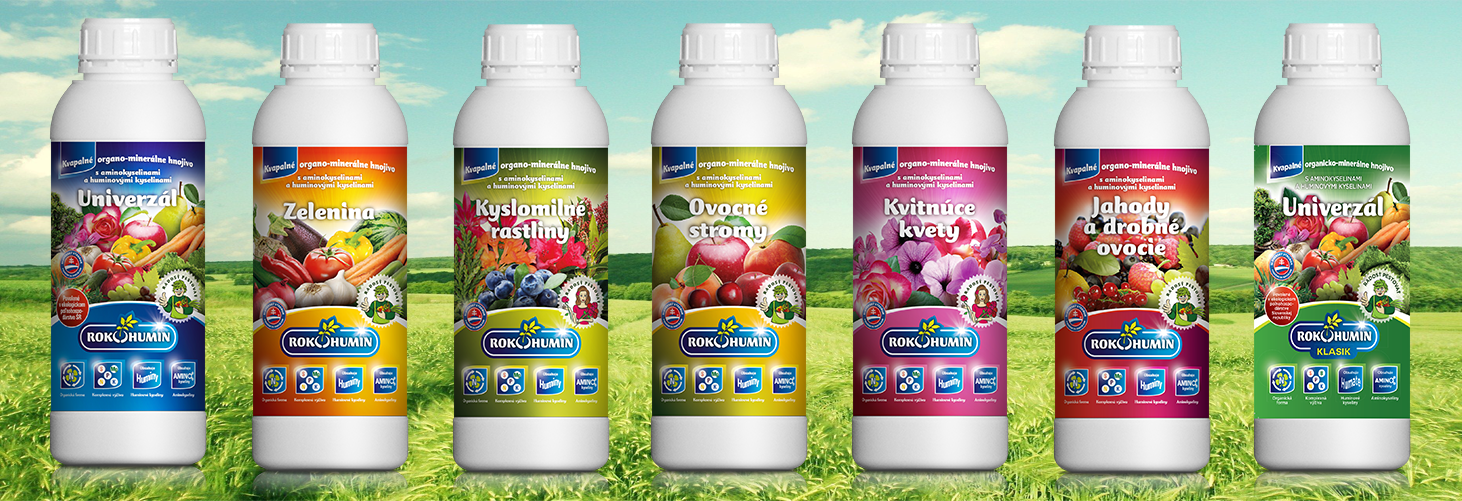
Traditional Rokohumin Variants
- • Universal (NPK 14-9-14)
- • Fruit Trees (NPK 11-12-12)
- • Flowering Plants (NPK 21-15-12)
- • Strawberries and Small Fruits (NPK 9-10-14)
Ecological Rokohumin Variants
- • Vegetables (NPK 5-10-14)
- • Acid-loving Plants (NPK 5-16-14)
- • Classic (NPK 4-9-14)
Effects
- • Enables better rooting
- • Improves the formation of root hairs, root length, and thus nutrient uptake from the soil
- • Extends the growing period of fruit vegetables and fruits
- • Improves metabolism and natural resistance to diseases and pests
- • Increases overall plant vitality
- • Helps increase soil fertility by supporting soil microflora (revitalizes the soil) - the fertilizer acts as food for soil microflora.
- • Prevents accumulation of heavy metals and harmful substances in plants
Fertilizer Characteristics
- • Multi-component liquid organic-mineral fertilizer made from nutrient-rich organic material.
- • Has universal use and is intended for fertilizing all types of plants and crops.
- • Contains nutrients in natural form and is approved for use in organic farming.
- • Applied by spraying on leaves, watering, or drip irrigation.
- • The fertilizer has very good adhesion to leaves and is resistant to rapid drying and washing off.
- • Allows all-day application.
What You Gain by Using the Fertilizer
- - You will grow crops in BIO quality
- - Your yield will be larger and crops richer in nutrients
- - You cultivate intensively and naturally at the same time
- - Every 1 € invested in fertilizer will return to you multiple times
Why Use Rokohumin
- - Increases the nutritional value of fruits
- - Enables rapid growth start and better rooting
- - Improves typical fruit coloration and supports flower setting
- - Increases chlorophyll content in leaves
- - Strengthens resistance to weather fluctuations and fungal diseases
Effects of Humic Acids
- • Promote root system development and increase germination
- • Are natural growth stimulators
- • Increase chlorophyll content, help improve photosynthesis
- • Prevent accumulation of heavy metals and harmful substances in plants (when fertilizing soil)
Effects of Amino Acids in the Fertilizer
Amino acids in the fertilizer are necessary for growth, regeneration, and development of plants. They also have great importance for soil microflora by supporting the activity of soil microorganisms and enzymatic activity. Plants can synthesize all the amino acids they need. Many amino acids are precursors or activators of phytohormones and growth substances in plants.
In stressful situations, the plant can accumulate a significant amount of free amino acids, which serve as a protective mechanism. The significance of this accumulation is that the plant spends less energy on protein synthesis.
- PROLINE - contributes to cell wall strength, increases plant resistance to stress factors.
- GLYCINE - increases chlorophyll concentration and thus improves conditions for photosynthesis.
- GLUTAMIC ACID – influences osmotic processes, positively affects pollination.
- METHIONINE – precursor of ethylene, strengthens root development, regulates stomatal opening.
- TRYPTOPHAN – precursor of auxin, helps overcome stress and prevents growth slowdown.
- ARGININE - increases synthesis of hormones associated with flower and fruit formation.
- ALANINE, VALINE, and LEUCINE – help improve fruit quality.
- HISTIDINE – supports ripening.
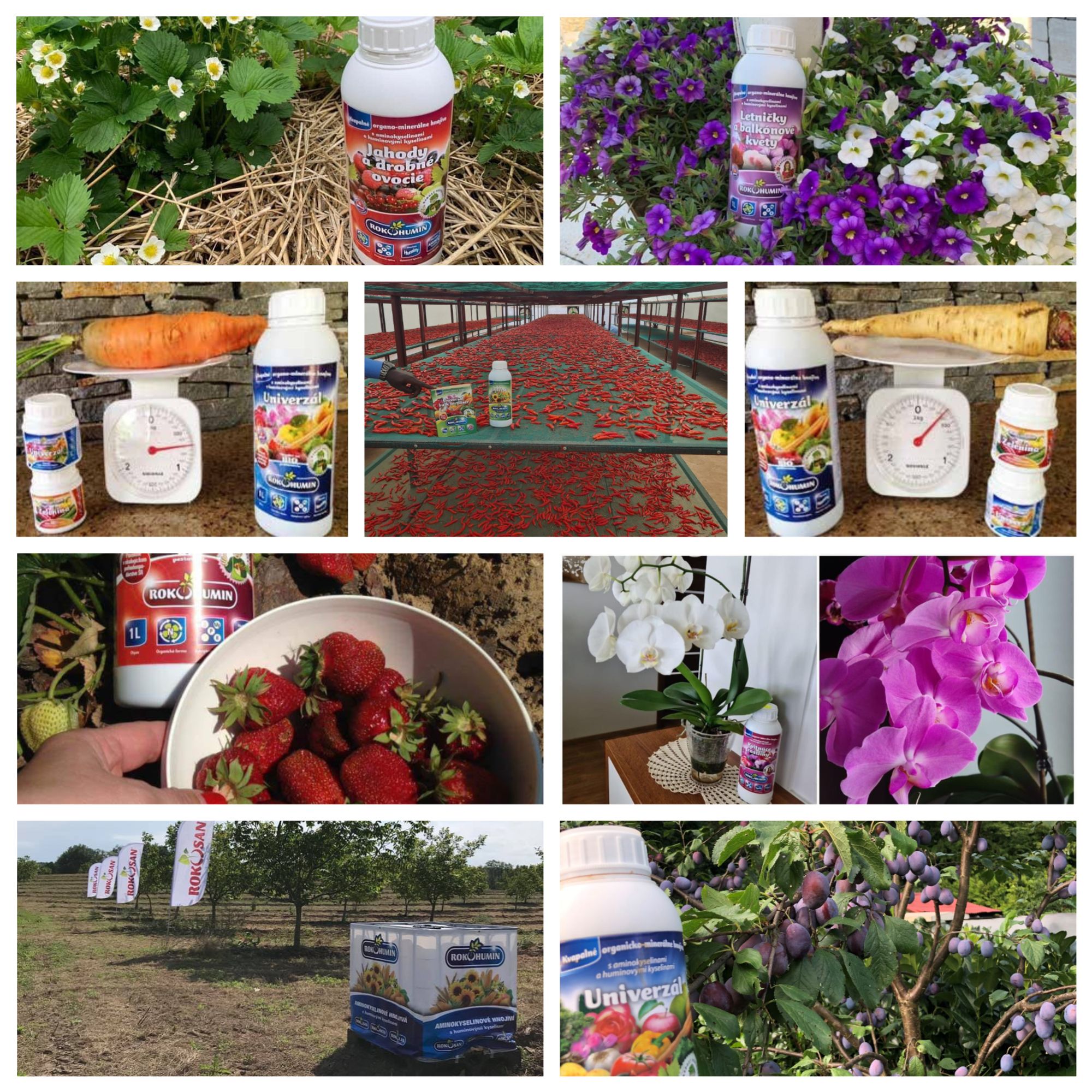
Spray Application
- • Represents a simple and targeted application through which nutrients are delivered quickly and precisely to the plant.
- • Allows application together with products for weed, disease, and pest control.
- • Application starts at 40 - 50% leaf coverage of the soil.
- • Do not apply during flowering! The protection period is 2 weeks before harvest.
- • Dosage for garden: 10 – 15 ml per 1 liter of water. Fertilize in the evening after sunset. Repeat after 25 days.
- • Dosage for field crops: 5 liters of fertilizer per at least 150 liters of water (cereals, rapeseed, sunflower, corn).
Watering or Drip Irrigation Application
- • Allows uniform and rapid uptake of all fertilizer components, enriches the soil with an important organic component.
- • Activates mineralization processes in the soil and helps humus formation.
- • Dosage: 15 – 20 ml per 1 liter of water. Watering near roots, preferably before rain. Repeat after 30 days. Complements well with granular fertilizer.
Hydroponic Plant Cultivation
Thoroughly mix the bottle contents and pour 15 ml into one liter of water. Pour the prepared solution into the hydroponic container. Replace the solution after 14 days.
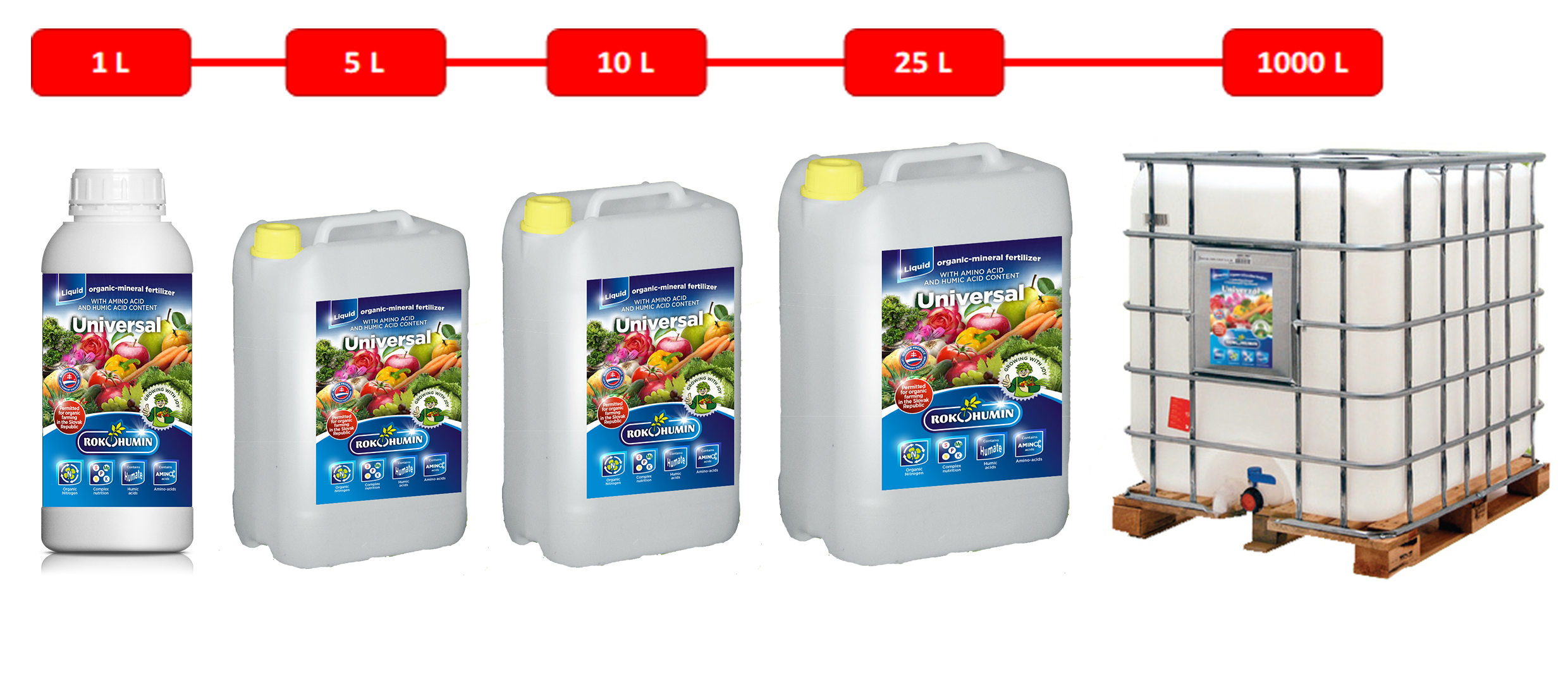
Packaging
Product Catalog


Operational Trial Results
 Central Control and Testing Institute of Agriculture, Variety Testing Department
SOYBEAN
| Crop: | soybean sown |
| Variety: | Cardiff colored |
| Plot: | 10.5 m² |
| Sowing / Harvest: | 5. 5. 2014 / 14. 10. 2014 |
| Trial location: | Vranov nad Topľou |
| Soil: | illimerized brown soil, pH 7.0 |
Results
- Control (no fertilization) - 2.83 t/ha (100%)
- Rokohumin 5+5 l/ha - 3.02 t/ha (106.7%)
- Rokohumin 5 l/ha - 2.96 t/ha (104.59%)
- Rokohumin 10 l/ha - 3.06 t/ha (108.13%)
 Central Control and Testing Institute of Agriculture, Variety Testing Department
SUNFLOWER
| Crop: | annual sunflower |
| Variety: | Fabiola CS colored |
| Sowing / Harvest: | 24. 4. 2014 / 29. 9. 2014 |
| Trial location: | Vranov nad Topľou |
| Soil: | illimerized brown soil, pH 7.0 |
Results
- Control - 4.92 t/ha (100%)
- Rokohumin 10 l/ha - 5.45 t/ha (112.6%)
- Rokohumin 5 l/ha - 5.38 t/ha (109.35%)
- Rokohumin 10 l/ha - 5.72 t/ha (116.26%)
 National Agricultural and Food Centre, Research Institute of Plant Production Piešťany
BARLEY
| Crop: | spring barley |
| Variety: | Sebastian |
| Sowing / Harvest: | 20. 3. 2014 / 31. 7. 2014 |
| Trial location: | VŠS Malý Šariš |
| Soil: | brown soil, pH 5.9 |
Results
- Control - 9.42 t/ha (100%)
- Rokohumin 5 l + 5 l - 9.64 t/ha (102.3%)
- Rokohumin 5 l + 5 l + 5 l - 9.9 t/ha (105.2%)
- Rokohumin 5 l + 5 l - 9.63 t/ha (102.3%)
 National Agricultural and Food Centre, Research Institute of Plant Production, Piešťany
WHEAT
| Crop: | summer wheat, winter form |
| Variety: | Sultan |
| Sowing / Harvest: | 1. 10. 2013 / 30. 7. 2014 |
| Trial location: | VŠS Malý Šariš |
| Soil: | brown soil, pH 5.2 |
Results
- Control - 8.78 t/ha (100%)
- Rokohumin 5 l + 5 l - 9.01 t/ha (102.6%)
- Rokohumin 5 l + 5 l + 5 l - 9.25 t/ha (105.3%)
- Rokohumin 5 l + 5 l - 8.96 t/ha (102%)
 Central Control and Testing Institute of Agriculture, Variety Testing Department
CORN
| Crop: | grain corn |
| Sowing / Harvest: | 28. 4. 2013 / 14. 10. 2013 |
| Trial location: | Haniska-Valaliky |
| Soil: | illimerized brown soil, pH 6.2 |
Results
- Control - 11.2 t/ha (100%)
- Rokohumin 10 l/ha - 11.45 t/ha (102.23%)
- Rokohumin 5 l/ha - 11.98 t/ha (106.96%)
- Rokohumin 10 l/ha - 12.18 t/ha (108.75%)